
Oh Muslims, How Your Behavior Can Fix Your Perception Automatically
The responsibility of how the world perceives us Muslims does not lie with outsiders—it lies with us. The solution is not hidden in long debates, but in the simple act of following the teachings of Islam and embodying the character of our beloved Prophet ﷺ.
Unfortunately, when we look around, many of us struggle with basic civic sense. We are loud and inconsiderate in public, we litter, we create disturbances, and we inconvenience others without realizing the long-term damage it causes. Our behavior does not just affect our reputation as individuals; it shapes the way the world views Islam itself.
When Do You Know Allah’s Rahma Has Reached You?
One of the greatest signs of Allah’s mercy (rahma) is when you start recognizing your own mistakes. When you take a hard look at your shortcomings and begin to self-correct, that is when real change begins. Islam emphasizes muhasaba (self-introspection). Every Muslim must ask:
- Do my actions reflect the teachings of Islam?
- Am I aligning myself with the Prophet’s ﷺ example, or am I deviating from it?
Each one of us is an ambassador of Islam. This role is not optional it comes with the identity of being Muslim. And with this responsibility, we cannot afford to misrepresent our faith through careless behavior.
The Perception Problem We Created
If the current generation continues on this path, our future generations will inherit a damaged perception that will take decades to undo. Worse, our children copy what they see. If they see us littering, arguing loudly, or behaving rudely, they normalize it. The cycle continues an endless loop of poor manners and lack of civility.
This problem begins at home. Civic sense and empathy are not taught in classrooms alone they must be instilled in family life. If a child grows up in a household that values respect, discipline, and kindness, that child carries it into the community.
Why Does the West Distrust Us?
We often complain that the West hates Muslims. But is it only prejudice, or do we also carry blame? When news headlines consistently feature Muslims in connection with crimes violence, abuse, drugs, corruption how do we expect outsiders to separate Islam from Muslim behavior? Why should they, when we ourselves fail to uphold the values of our religion?
Many Muslims move to Western countries but refuse to integrate, instead isolating themselves in closed communities. At the same time, they enjoy the benefits of the host country freedom, infrastructure, opportunities but show little respect for the culture, traditions, or sentiments of the locals.
It is their generosity that allows us to build mosques, practice freely, and celebrate our festivals. Yet we still insist on processions that disrupt streets, or public practices that cause inconvenience. Why not celebrate respectfully indoors, honoring both our faith and the community around us?
The Way Forward: The Prophet’s Teachings
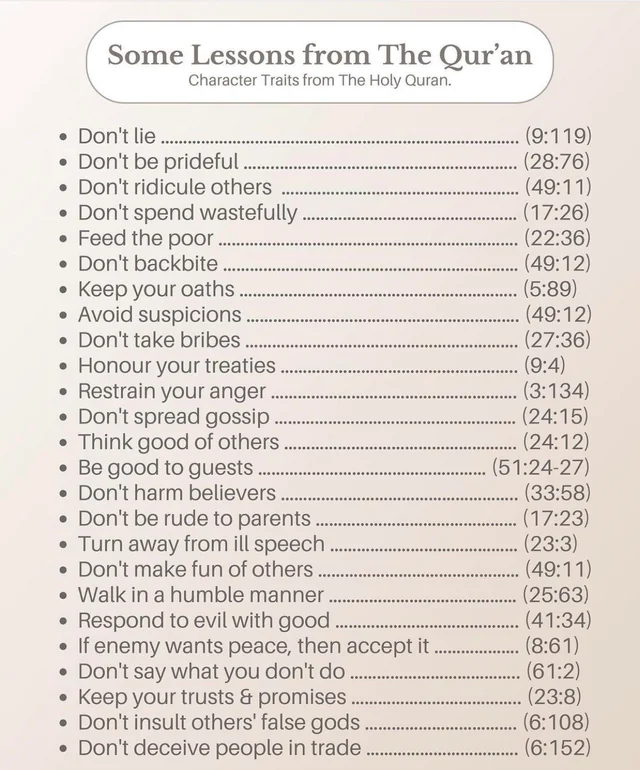
The solution is not complicated. Islam has already provided it. The above list of teaching is the perfect proof of what we’ve been talking about. The Qur’an’s guidance is not “Muslims for Muslims only.” These lessons are universal they apply to how Muslims treat everyone, Muslim or non-Muslim. If we truly lived by even half of this list, our perception problem would disappear overnight.
A Lesson from the Parsis
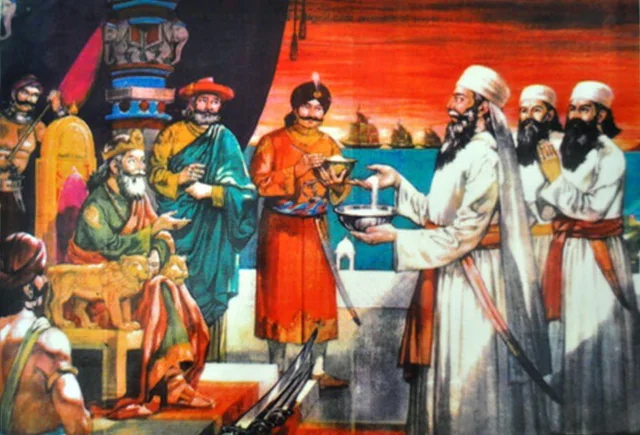
History gives us a powerful example in the Parsi Iranian community. When they fled persecution in Iran and sought refuge in Gujarat, India, the Hindu king expressed his land was already full by presenting a bowl of milk. The Parsi priests dissolved sugar into the milk, promising they would assimilate like sugar sweetening society without overflowing it.
They kept their word. Till today, Parsis in India are regarded as assets to the nation, known for honesty, philanthropy, and progress, with remarkably zero to extremely low crime rates. They blended into society while contributing positively.

Muslims could have taken the same approach wherever we migrated, becoming like sugar in the milk enhancing and sweetening the community, not burdening it.
Conclusion
Perception will not change through arguments, debates, or media campaigns. It will change only when Muslims reflect the character of Islam in their actions. Each of us is a walking representative of our faith, whether we accept it or not. If we align our behavior with the Prophet’s ﷺ teachings, the world will not just tolerate us it will respect us.
The responsibility lies on us, and the time to start is now.