


In the tapestry of Islamic teachings, the thread of cleanliness is woven intricately, forming an essential aspect of the faith. From the recitation of the Quran to the practice of daily rituals, cleanliness, known as “Paaki,” permeates every facet of a Muslim’s life. It is not merely about physical hygiene but encompasses a state of purity that extends to the soul and spirit.
The Quran, the divine scripture of Islam, resonates with verses that underscore the significance of cleanliness. Allah SWT proclaims in Surah Al-Baqarah (2:222), “Indeed, Allah loves those who are constantly repentant and loves those who purify themselves.” This profound verse encapsulates the divine love for those who strive for purity inwardly and outwardly.
The emphasis on purity is further echoed in Surah Al-Muddathir (74:4-5), where Allah SWT commands, “And your clothing purify. And uncleanliness avoid.” These verses illuminate the importance of cleanliness in attire and behavior, reminding believers to shun impurities and adorn themselves with purity.
Prophet Muhammad (peace be upon him), the exemplar of Islamic teachings, elucidated the significance of cleanliness through his sayings and actions. He declared, “Cleanliness is half of faith,” illuminating the profound connection between purity and faith. This hadith encapsulates the essence of Islamic teachings, highlighting the integral role of cleanliness in spiritual growth and devotion.
Another hadith narrated by Abu Malik Al-Ash’ari states, “The Messenger of Allah said: ‘Purification is half of faith, and Al-Hamdu Liliah (Praise be to Allah) fills the scale. Subhan Allah (Glory be to Allah) and Al-Hamdu Liliah (Praise be to Allah) fill up what is between the heavens and the earth. And the Salah (prayer) is light, the charity is proof, the patience is illumination, and the Quran is proof either for you or against you. Every person starts his day as either a vendor of his soul, freeing it or causing its ruin.'” This profound hadith emphasizes the importance of cleanliness and delineates the interconnectedness of faith, gratitude, and devotion in Islam.

In Islam, the rituals of Purification, namely Wudu (ablution) and Ghusl (bath), hold profound significance in daily worship and spiritual practice. Wudu, or ablution, is performed before each prayer, cleansing specific body parts to attain a state of ritual purity. It involves washing the hands, mouth, nose, face, arms, and feet, symbolizing the Purification of both body and soul.
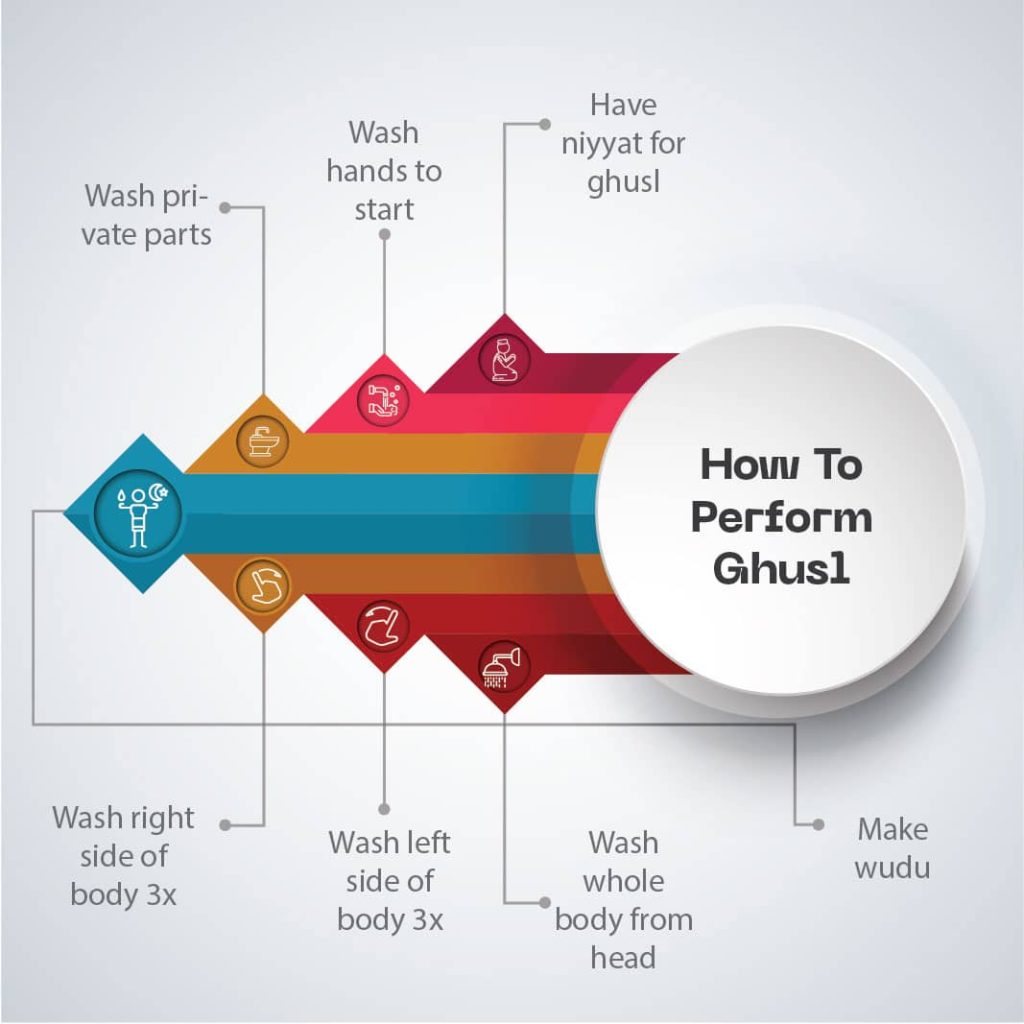
Ghusl, on the other hand, is a comprehensive ritual bath performed to purify oneself from major impurities, such as sexual intercourse, menstruation, or postnatal bleeding. It entails washing the entire body to purify oneself before engaging in acts of worship or entering sacred spaces.
Beyond the physical cleansing, cleanliness in Islam encompasses a holistic approach to purity. It entails maintaining purity in one’s thoughts, words, and actions and striving for integrity and righteousness in all endeavors. The Prophet Muhammad (peace be upon him) emphasized the importance of cleanliness in all aspects of life, from personal hygiene to cleanliness of the environment.

Practicing cleanliness extends beyond ritualistic acts to encompass daily habits and behaviors. Muslims are encouraged to maintain cleanliness in their homes, workplaces, and communities, fostering an environment of purity and well-being. This includes keeping the surroundings clean, disposing of waste responsibly, and observing proper hygiene practices.
In the tapestry of Islamic teachings, cleanliness emerges as a thread that binds together faith, devotion, and spiritual growth. From the verses of the Quran to the sayings of the Prophet Muhammad (peace be upon him), the importance of purity resonates deeply within the hearts of believers. Through rituals of Purification, acts of cleanliness, and a commitment to integrity, Muslims strive to embody the essence of Paaki, embracing purity as a cornerstone of their faith and way of life.
In embracing the teachings of Islam regarding cleanliness, believers nurture physical well-being and cultivate spiritual purity, drawing closer to the divine and attaining a more profound sense of fulfillment and peace. As we embark on this journey of Purification, may we be guided by the light of faith, steadfast in our commitment to cleanliness, and enriched by the blessings of divine grace.
Cleanliness is half of faith, illuminating the path to spiritual enlightenment and drawing believers closer to the divine presence. In the pursuit of purity, may we find solace, strength, and tranquility as we strive to embody the essence of Paaki in our lives.